

Dataland Isn’t the AI Apocalypse I Feared It Would Be
Refik Anadol’s latest creation, billed as “the world’s first Museum of AI Arts,” is breathtaking, ethically ambitious, and haunted by one glaring absence: humanity.

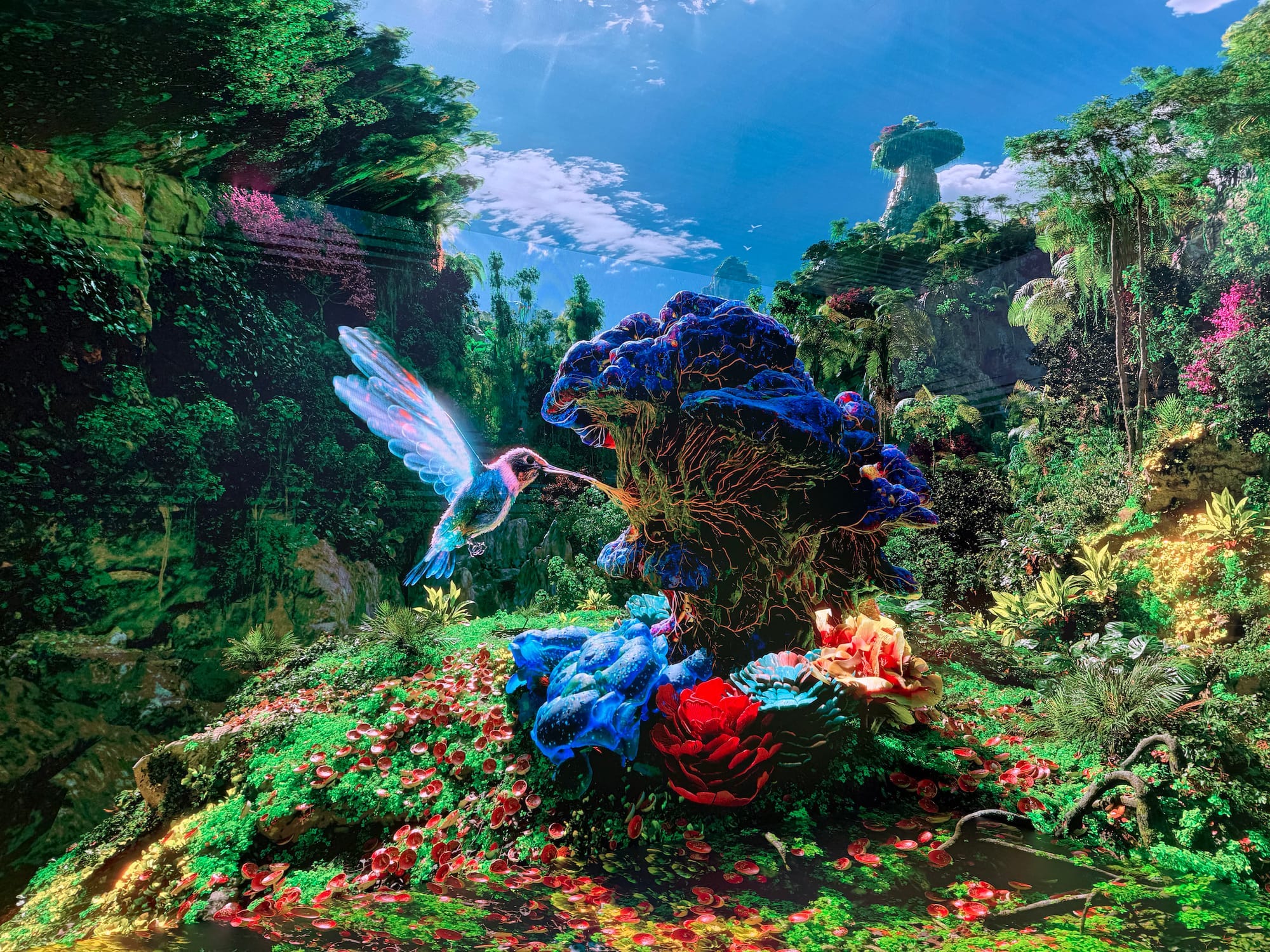
If you’re looking to build “the world’s first Museum of AI Arts,” Los Angeles feels inevitable.
I mean, sure. The traffic is shit, and delusional reality TV alums tend to confuse themselves with legitimate politicians, but California is the fourth-largest economy in the world—thanks in part to all the entertainment, venture capital, and Kardashian-flavored tourism the City of Angels is world-renowned for.
So eager to contribute to the chaos, media artist Refik Anadol has set up a 25,000-square-foot, multisensory complex dead smack in the middle of downtown Los Angeles and unleashed Dataland: a “digital ecosystem where human imagination meets the creative potential of machines.”
On the surface, that translates into an immersive—and extravagant—living art museum built on “permission-based” datasets. But with the deluge of questions and controversy surrounding the ethical and environmental impact of artificial intelligence, there’s also been plenty of backlash. Social media had already made it its mission to rake Anadol over the coals and dismiss his digital metropolis as “second-rate entertainment” before it even opened to the public. But since I’m Black, nosy, and impatient, I carjacked a UPS truck and decided to sneak into Dataland through a loading dock before its grand opening.
(Okay, fine. I was actually invited to pull up weeks before it officially opened to the public on June 20. But if rappers can lie for street cred, I figured I’d give it a shot too.)
My first impression of Dataland wasn’t the sprawling rainforest that greeted me in the Data Pavilion. It was the Discovery Portal, where I was equipped with a collar that emits an assortment of “bespoke rainforest-inspired” fragrances and a wrist sensor that monitored my galvanic skin response—essentially measuring my excitement on a scale of Donald Trump to crab legs.
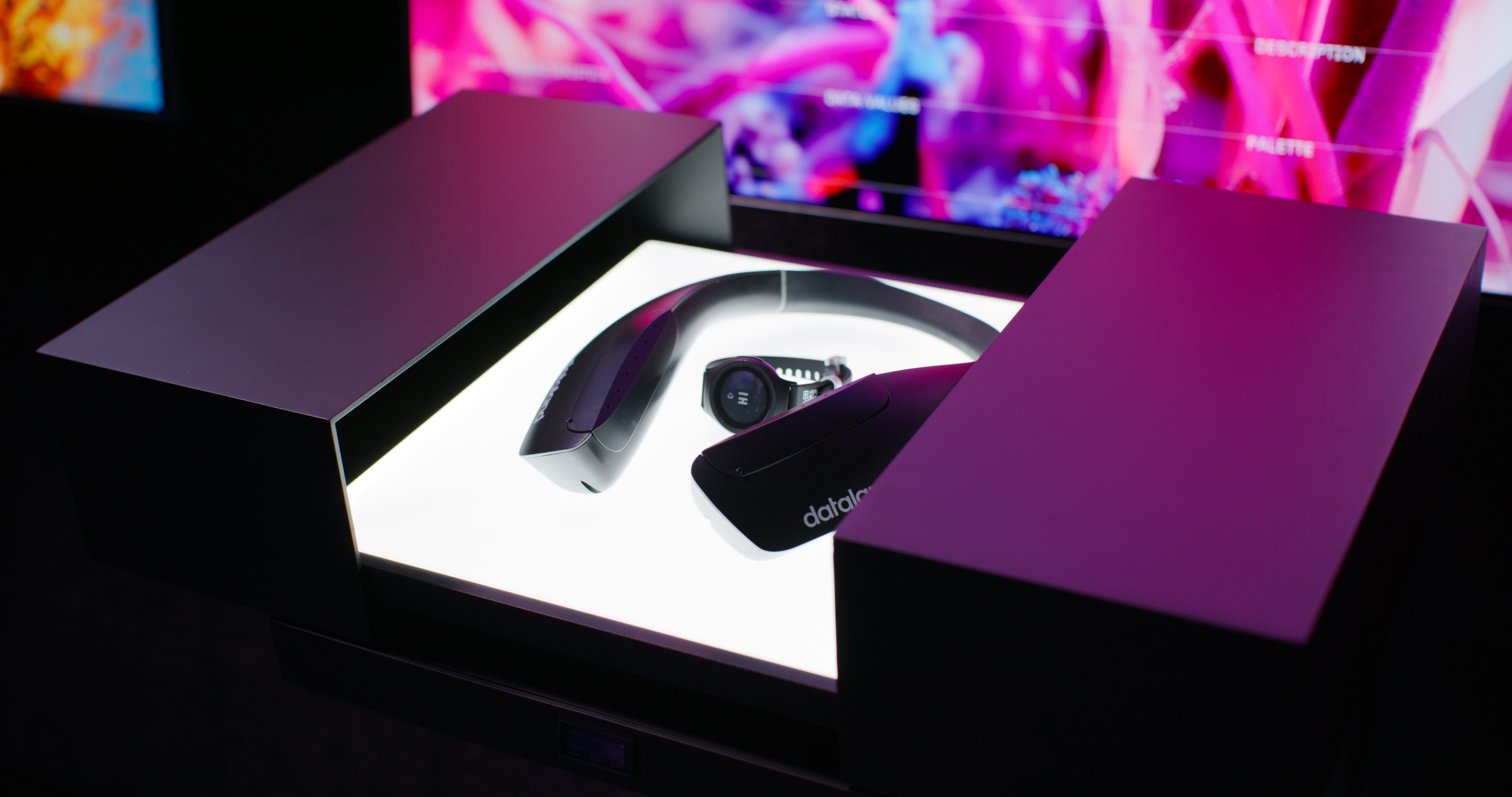
Each device was specifically designed to prime my senses for the unknown. So, with uncertainty creeping in as I descended the escalator, the goosebumps climbing up my arms were all I could think about as Dataland’s inaugural exhibit, Machine Dreams: Rainforest, swallowed me whole.
Explaining the unexplainable is a tall order, but the euphoria I felt as I drifted through swirling bromeliads and neon butterflies was exceeded only by the laughter of my fellow attendees. I spent a good 10 minutes stumbling around in awe—fluorescent water lilies dancing on the ceiling will do that to a person—and didn’t realize how hard I was smiling until I met the eyes of grown men and women skipping around with childlike glee. Any experience that can lure the inner child out of prestigious guests and grizzled reporters is worth the price of admission. And to that end, Dataland unquestionably delivers.
This combination of astonishment and curiosity became a recurring theme in the Infinity Room, where Anadol’s Large Nature Model incorporates scents as part of its narrative arc. Priding itself on being trained on “nature’s inherent intelligence,” as opposed to our far more contentious human ingenuity, it tosses technology, art, and nature into a blender to conceive something truly remarkable: a hummingbird’s flight through the Amazon rainforest.
In total, Dataland features five galleries, each offering divergent—and sometimes interactive—experiences. Some will turn your stomach inside out, others transform your “emotional temperature” into an elaborate sculpture, but each fills the room with wonder and delight.
For those with deep-seated resentment towards AI—like me!—it was a relief to learn that this billion-dollar endeavor isn’t the environmental nuke I thought it was. Thanks to a Google Cloud server running on 87% carbon-free renewable energy, Anadol explained that the amount of juice required to generate artwork for each visitor is equivalent to a single iPhone charge.
That’s…impressive.
There’s also the fact that the generative art featured throughout the exhibit isn’t illegally poached from unwilling participants. Because apparently, not everyone’s in the business of aggravated robbery like ChatGPT or Suno. Instead, Anadol and company visited 16 rainforests themselves to compile weather data and visuals, filling in the gaps with a generous helping of images—over 500 million, to be exact—provided through partnerships with Getty, London’s Natural History Museum, the Smithsonian, and other institutions.
So their AI data is about as “ethically collected” as it can get.
Now, whether you feel any of this is necessary is entirely your discretion. But it’s abundantly clear that, despite any pushback or outrage, Anadol and his team went to great lengths to ensure that if Dataland is going to exist, that his AI Disneyland is as ethically sound as possible.
That said, the human element of Dataland is noticeably absent, veering much closer to spectacle than actual art. Gone is the authentic expression of personal experiences or ideas; Dataland is a regurgitation of ecological data. And without that emotional imprint, it lacks the same humanity that it extracts from its visitors.
More importantly, if the purpose of this museum is to champion artistic evolution and honor the vibrant natural world that inspires it, wouldn’t we be better off exploring nature than merely emulating it?
This is all by design, of course, but I suppose that’s also the point: Humanity is often imitated, but it can never be replicated.
Dataland isn’t the apocalypse I feared it to be.