

‘Jerry West: The Logo’ Reveals the Man Beneath the Myth—and the Trauma That Defined Him
The West Virginia native was just as human as the rest of us.

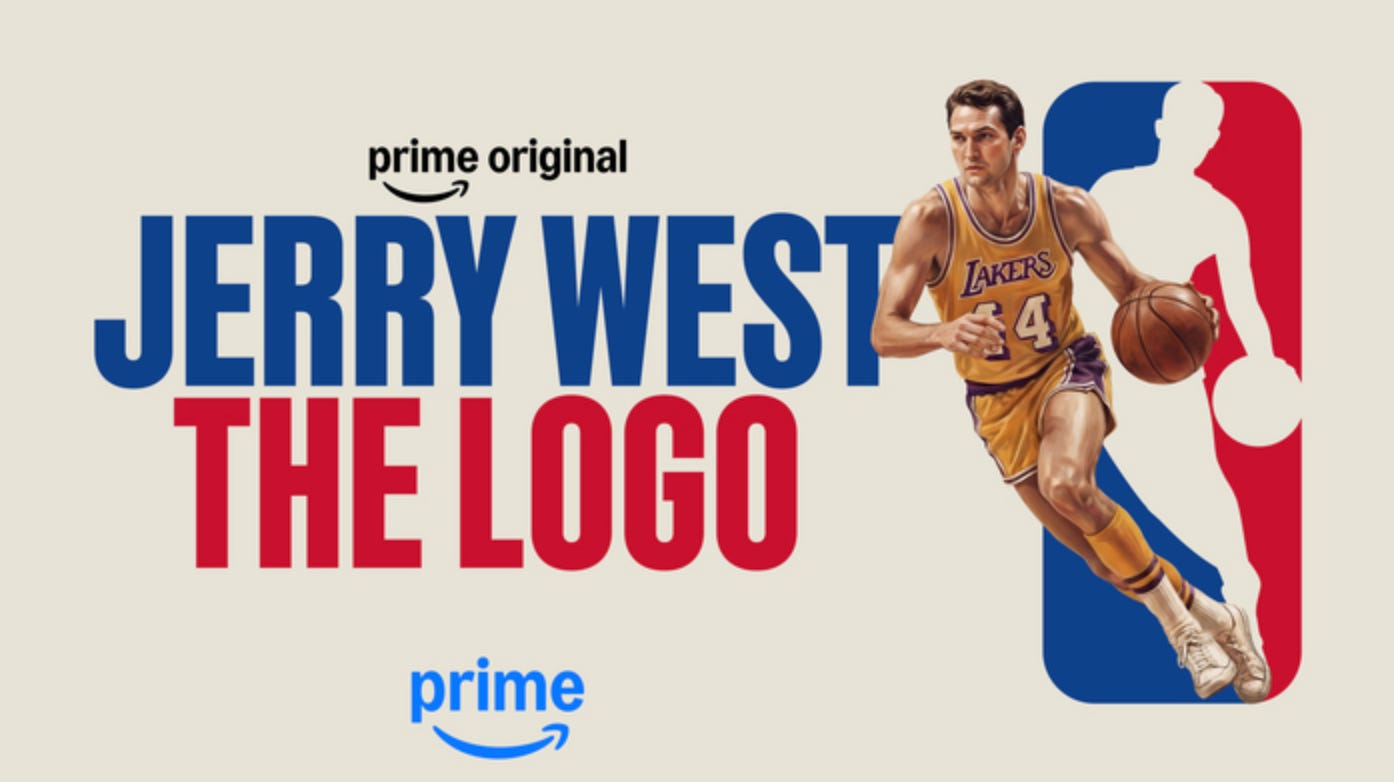
Jerry West is kind of a big deal.
Aside from having impeccable taste in player acquisitions—he was the architect behind the 1980s “Showtime” Lakers before luring Kobe and Shaq to Los Angeles to jumpstart the next dynasty in the 2000s—he was nice as fuck on the basketball court.
Like, 12-time All-NBA, nice. 1960 Olympic gold medalist, nice.
1972 NBA champion, nice. NBA 75th Anniversary Team, nice.
The only player in NBA history to win Finals MVP while playing for the losing team, nice.
Then, after he decided to stop breaking everyone’s ankles on the court for a living, he continued his reign of terror as a coach—remember that pit stop at the Western Conference Finals in 1977?—and front office exec, where, with the keys to the kingdom, the Lakers blossomed into the gold standard in professional sports, and the moribund Memphis Grizzlies flourished as a perennial playoff team. He then went on to sprinkle his Midas touch on the Golden State Warriors—who ran up two championships during his tenure—and the Clippers before he passed at the age of 86 in 2024.
So simply put, Jerry West is basketball.
That’s why he was inducted into the Naismith Basketball Hall of Fame on three separate occasions: as a player (in 1980), on behalf of the 1960 U.S. men’s Olympic basketball team (in 2010), and for his unprecedented success as a general manager and advisor (in 2024).
Oh, and the NBA logo? That’s his silhouette.
So if there’s a professional athlete in the history of Western Civilization who’s deserving of an Amazon MGM Studios documentary, it’s Jerry West. And in Jerry West: The Logo, director Kenya Barris peers behind the mythology to reveal the person—and every ounce of pain—buried beneath.
Early in this doc, the man who collected an astonishing eight NBA championships as an executive offers a candid confession: “I learned so much from winning, but more from losing.” And as the byproduct of an impoverished, abusive household, it becomes almost immediately clear that for all of the accolades he accrued later in life, the crippling losses began early.
His childhood was fraught with violence, and sadly, it only escalated after his older brother, David, joined the military and was killed in the Korean War. It’s hard to imagine spending the holidays with your brother’s casket next to the Christmas tree, yet as devastating as David’s loss was, Jerry insists that the tragic death of Kobe Bryant decades later was just as emotionally catastrophic. We also learn that the first time Jerry’s wife ever saw him cry was when Magic Johnson was diagnosed with HIV in 1991.
While Jerry is somber as he revisits these ghosts of the past, it’s his friends and family who contextualize the true extent of his anguish through their own firsthand accounts. He’s described as withdrawn and emotionally inaccessible—greeting his sons with handshakes instead of hugs—and affable one day, then struggling to even get out of bed the next. He even admits that he doesn’t use the words “I love you” because he “doesn’t know if it’s inside of me.”
Further fracturing his psyche was the toll that basketball took on him. Despite being synonymous with winning as an executive, losing seven consecutive NBA Finals to the Boston Celtics as a player clearly broke something inside of him. So much so that his son reveals that his father almost had a panic attack upon returning to Boston Garden as the Lakers’ general manager, and that the family is forbidden from ever wearing green.
We often view Jerry through the prism of invincibility, as he’s widely considered one of the greatest players, and the single greatest front office executive, in the history of the sport. But how he viewed himself wasn’t framed by his achievements, he was framed by calamity—and the trauma that burrowed itself deep within his soul until his dying day.
For the casual fan, Jerry West: The Logo is a compelling collection of riveting interviews and obscure archival footage, presented through Barris’ curious lens. But if you’re anything like me, it’s the juicy morsels of compassion and candor that make this documentary such a satisfying treat.
Jerry West: The Logo is available on Prime Video on April 16th.