

‘Michael’ Turns the Pursuit of Perfection Into an Autopsy
Hee and hee. In that order.

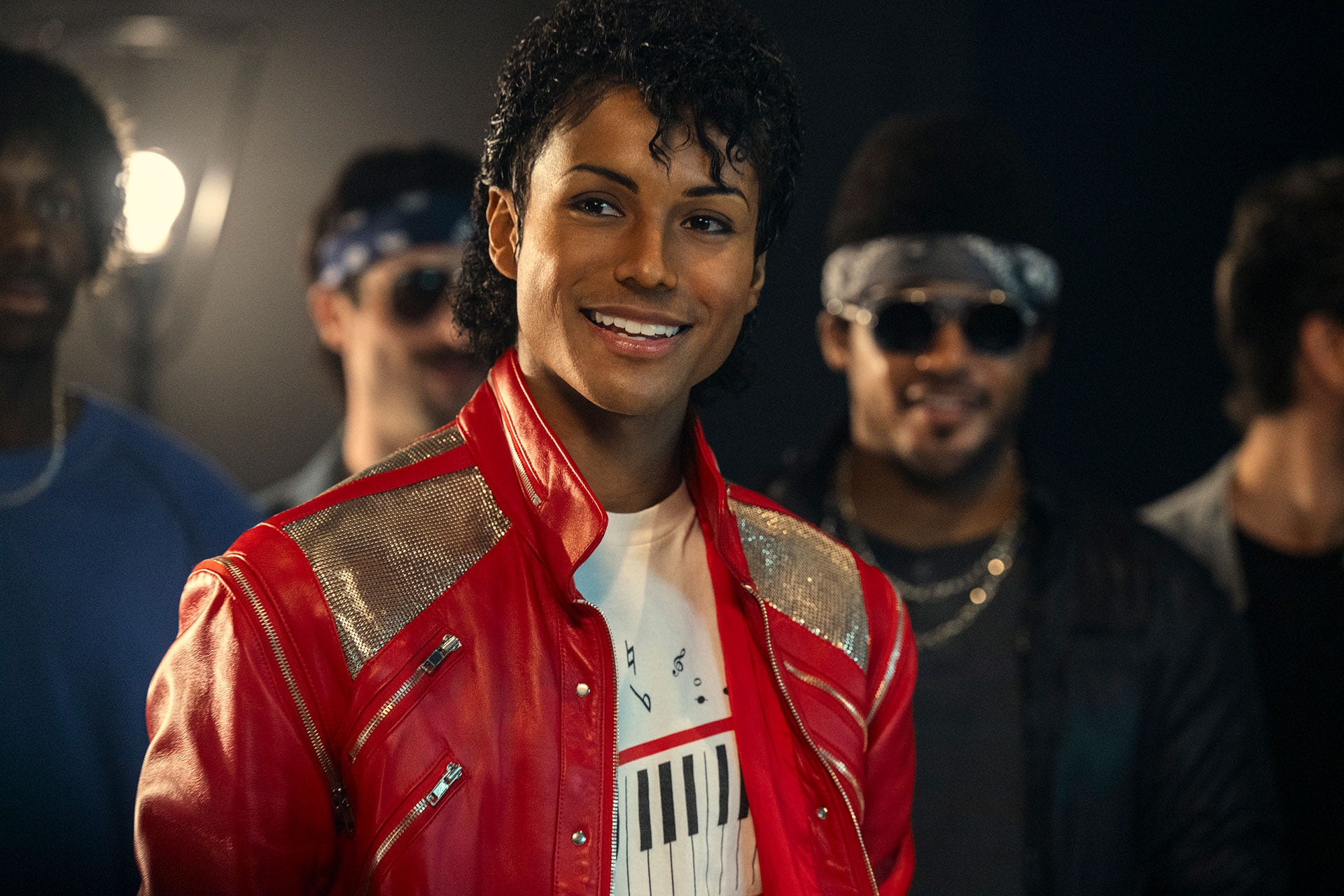
At this point, we’re all at least vaguely familiar with the life and legacy of one Michael Joseph Jackson.
His impoverished upbringing in Gary, Ind., has been well chronicled, as has his subsequent “discovery” and tutelage under Diana Ross. Some of us were even lucky enough to witness his ascent to superstardom firsthand. First, as a spellbinding pubescent with the Jackson 5 as early as 1964, before soaring to even greater heights as a solo act—earning the distinction, and the illustrious crown, of the King of Pop.
Then that’s when things went…left.
The fascination with children; the Elephant Man’s bones; the words “to the Badd!!”; the endless succession of plastic surgeries.
The allegations; the court dates; the tabloids.
The tragic demise in 2009.
The documentaries.
Unpacking all of this is already complicated and confounding, but especially when Lionsgate tasks you with untangling an epochal career that spanned five decades, and funneling it into a mere two hours of runtime. A feat of this magnitude is beyond the capabilities of most, but thankfully, Antoine Fuqua is equipped for the job—and proves it as the director of the highly anticipated biopic, Michael.
The strength of Michael lies in its self-awareness: This is a film that’s less about spectacle—a trait that's inherent to all things Jackson—and more about how Michael’s ambitions are contextualized and presented to the public. From his father’s devious machinations, to the pressure—and guilt—Michael navigates while keeping his family’s musical empire afloat, it becomes almost immediately clear that the greatest obstacle to his salvation is the family holding him hostage—musically, literally, and figuratively.
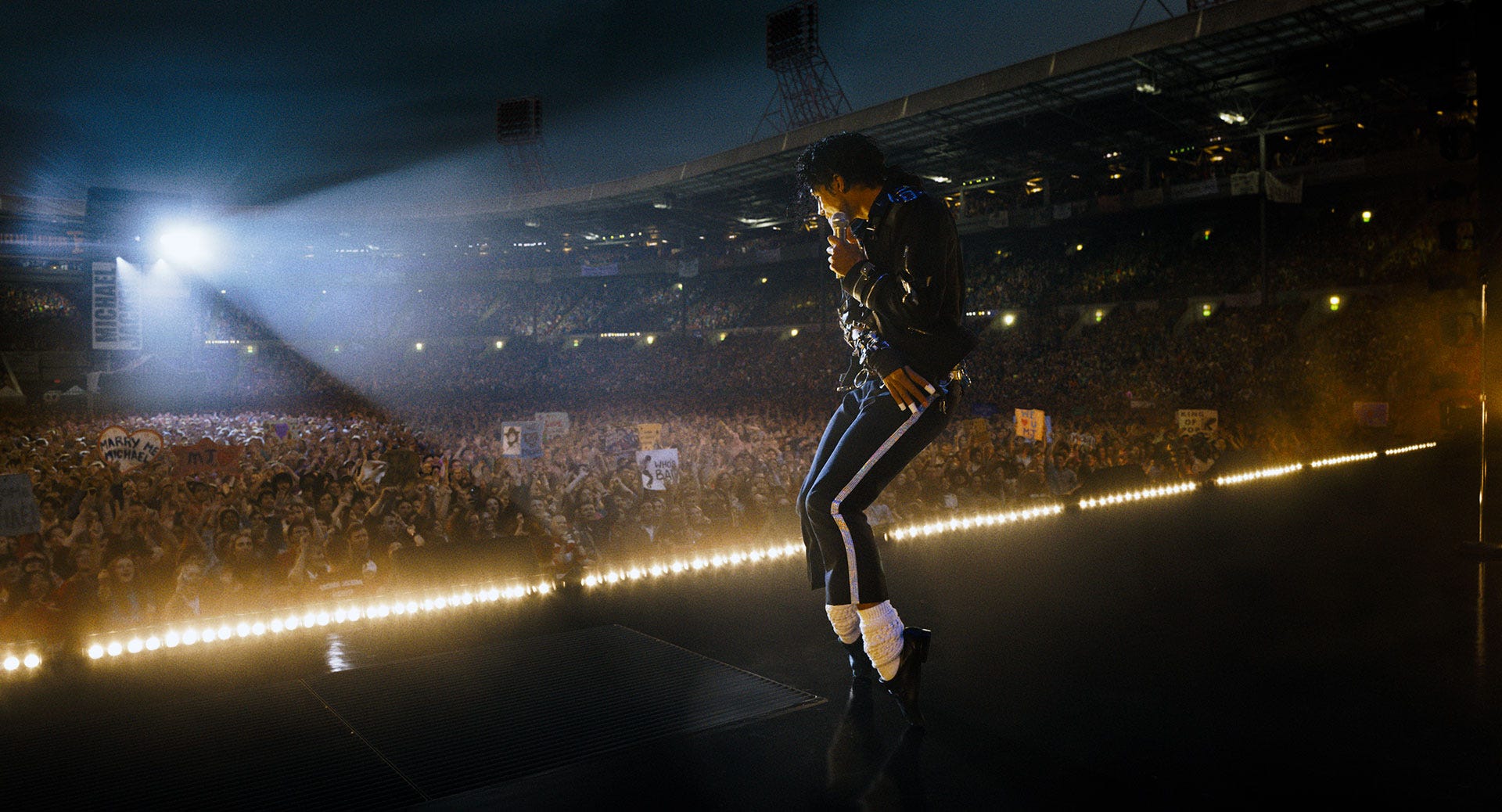
Yet despite this encumbrance, his family is presented as more of an ominous threat than a distinguishable one. Because unlike the 1992 miniseries The Jacksons: An American Dream, Fuqua’s incarnation isn’t a family affair—nor a five-hour odyssey.
Instead, Michael is laser-focused on its subject, and its subject only, with his brothers portrayed as ancillary emotional baggage instead of three-dimensional human beings. There are glimpses of life to prove they exist, but if you expect to revisit Joe’s rampant adultery or Jermaine’s tumultuous exit from the Jackson 5, this ain’t the movie for you.
And don’t even ask about Janet.
So instead of watching him quarrel with, and overshadow, his siblings, Michael explores the mythology and unwavering conviction of one of the greatest entertainers the world has ever seen. More specifically, it deconstructs his relentless pursuit of perfection—and the rewards and consequences therein.
He had to be the biggest artist.
“You’re confident, you’re strong,” he mumbles to himself under his breath in the studio. “You’re the greatest of all time.” The result is “Don’t Stop ‘Til You Get Enough,” the fiery dancefloor anthem that helped elevate disco and thrust Michael into musical immortality.
He had to have the biggest song.
It’s not exactly a secret that MTV wanted no parts of our Black asses early on. But Michael—and his manager, John Branca—ensured that would change forever once “Billie Jean” usurped their airwaves.
He had to have the perfect face.
“My face isn’t symmetrical,” Michael laments before his first nose job. “For the photographs and all. I have to be perfect.”
It’s a tragic realization that serves as the impetus for decades of self-mutilation.
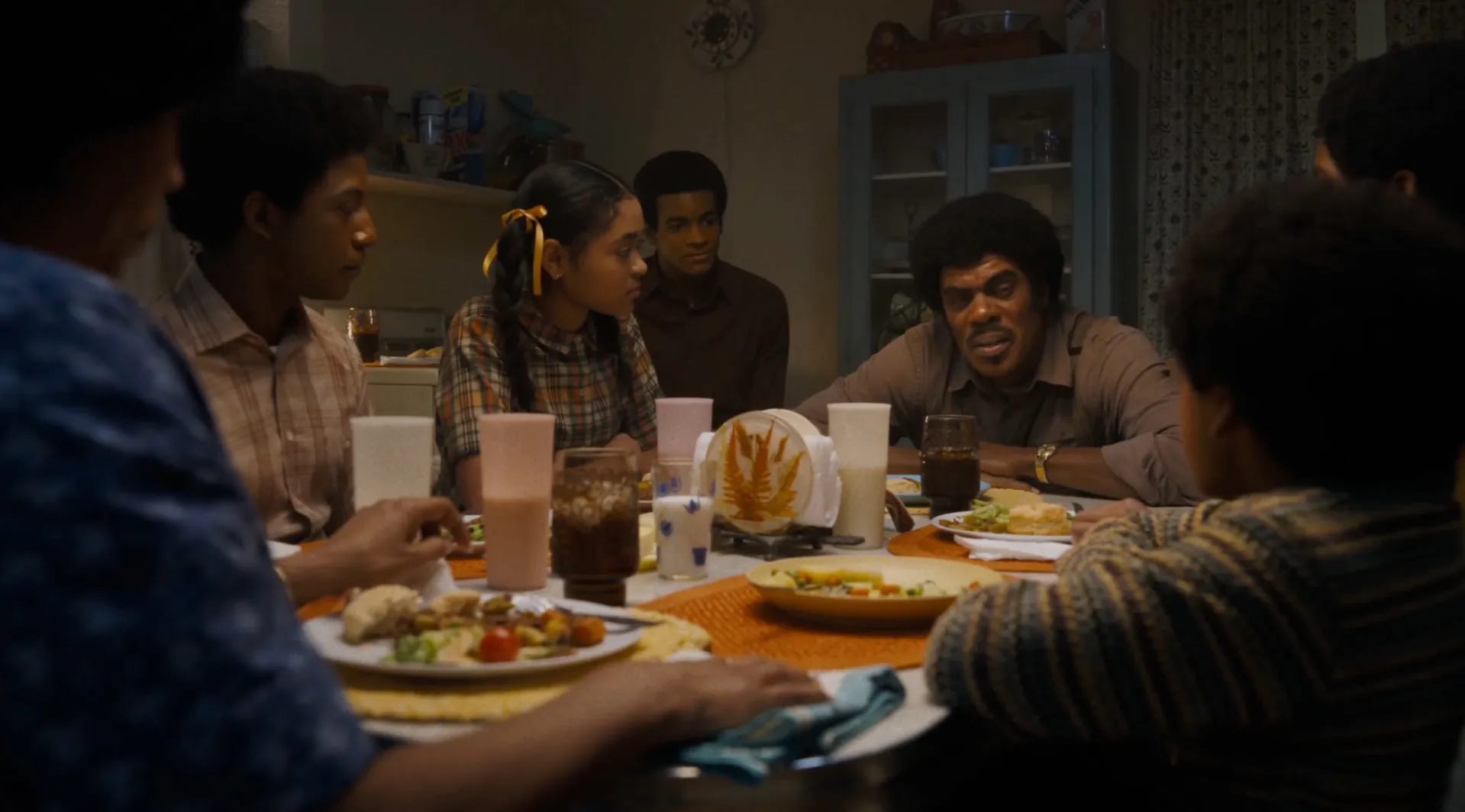
Yet for all his ambition and talent, every hero has a nemesis. And sadly, Michael’s was his own father. We’ve all heard stories of the horrors that Joe Jackson inflicted upon his wife and nine children, and it’s Coleman Domingo who’s tasked with executing a similar balance of villain with visionary.
With his portentous presence and intimidating leer, he steals every scene with relative ease, disguising Joe’s sinister motives behind altruism. But what makes Domingo’s interpretation of Joe Jackson so terrifying isn’t what he does on screen, it’s what his family—and orbiting music execs—believe he’s capable of.
It’s an Oscar-worthy performance, peppered with vicious jabs like, “What kind of son fires his father? You’ve got a lot to learn about family.” It also demonstrates how, far too often, parents only want their children to succeed on their terms, as Michael is subjected to a barrage of insults and bullied into a Victory tour he wants no parts of for his perceived insolence.
In closing, Michael isn’t a perfect movie, but very few are. The decision to omit his famous brothers and sisters almost entirely—despite their decades of contributions and achievements—was deliberate, but curious. Especially considering how intertwined their collective popularity was throughout the ‘70s and ‘80s. That said, for Black folks, there’s a holy trinity of music biopics: 1998’s The Temptations, 2017’s The New Edition Story, and the aforementioned The Jacksons: An American Dream.
Michael is firmly entrenched in that echelon, and deservingly so—not because it mythologizes the man who taught us to moonwalk, but because it understands the unfathomable cost of becoming him. Perfection didn’t define Michael. It was the pursuit of it—and everything we lost with him.
Michael premieres in theaters on April 24.