

‘We Are the Drums’: Raphael Saadiq on 'Sinners,' D’Angelo, and Letting the Blues Find Him
With an Academy Award for Best Original Song hanging in the balance, the Grammy Award-winning musician has plenty to talk about—and even more to be grateful for.

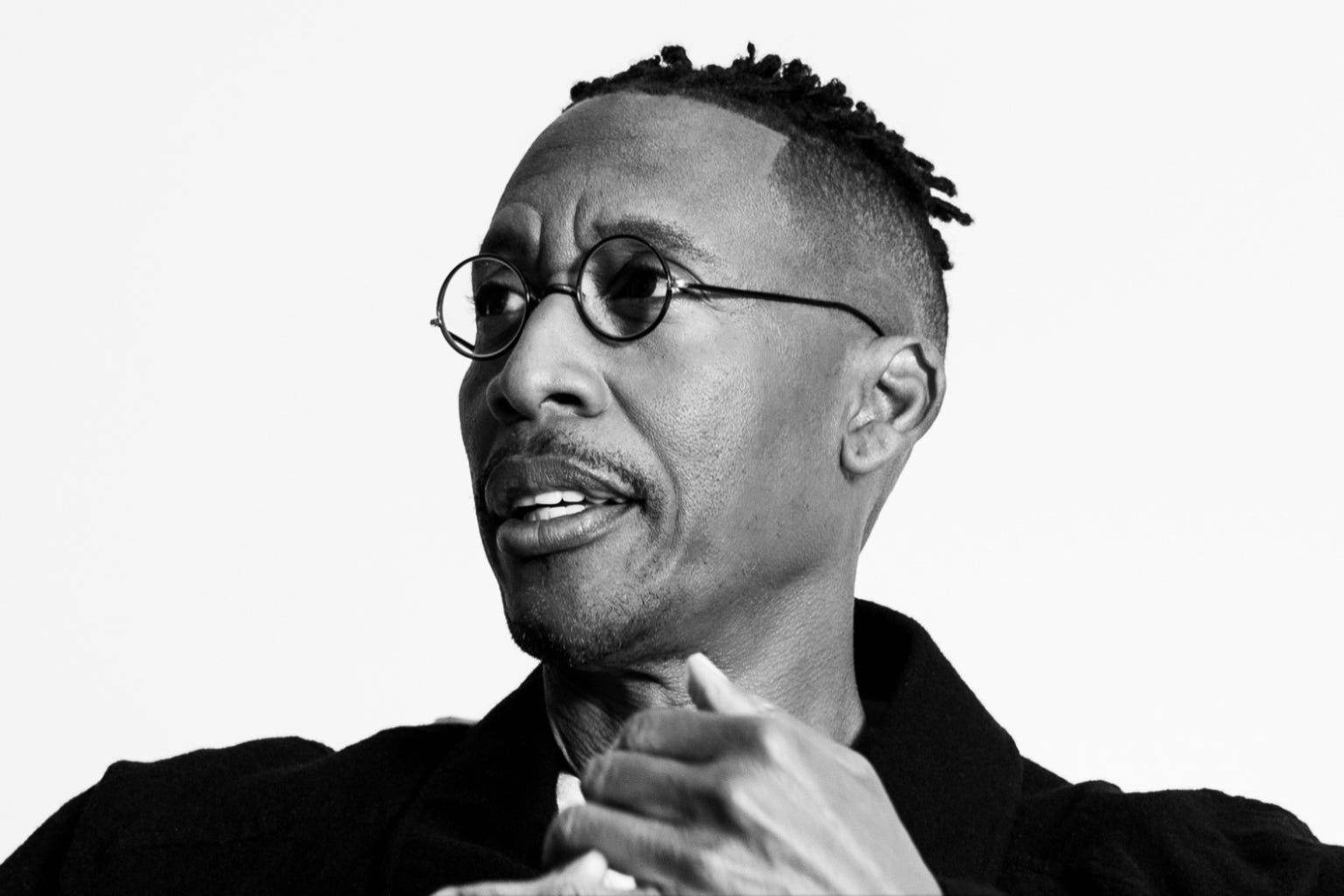
“This is crazy.”
Despite former Tony! Toni! Toné! frontman Raphael Saadiq’s claims that “It Never Rains in Southern California,” on an uncharacteristically dreary morning, the clouds bearing down on Los Angeles are doing exactly that. Undeterred, he offers a mea culpa: “It doesn’t rain, it like—storms here. Lucky I wore some boots though.”
If his calm demeanor in the midst of chaos comes as a surprise, it shouldn’t. With Ryan Coogler’s Sinners taking Hollywood by—well—storm during awards season, Saadiq’s lone contribution to its soundtrack, the spellbinding “I Lied to You,” is up against Diane Warren, KPop Demon Hunters, and others vying for Best Original Song at the upcoming 98th Academy Awards.
It’s the type of sonic immortality that, after nearly 40 years in this business, honestly feels inevitable.
So, in between flash flood warnings and accolades for his executive production on Brent Faiyaz’s latest album, Saadiq and I discussed all things Sinners, the tragic loss of his “brother” D’Angelo, and the invaluable role his grandmother plays in his appreciation for Black History Month.
This interview has been edited and condensed for clarity.
Jay Connor: Sinners is easily one of the most culturally profound movies in recent memory—if not ever. How did you become involved in such an impactful project?
Raphael Saadiq: I got a phone call from Ryan Coogler. We’re both from the Bay Area, both born and raised in Oakland. We never met in person, but we knew of each other. I also got a call from [Grammy Award-winning composer] Ludwig Göransson, who scored the movie. They invited me over and gave me a rundown.
Ludwig is a beast.
Yeah, he’s a beast.
He’s no joke. And with him using blues as the lifeblood of this soundtrack, what was the creative process like with “I Lied to You”?
I spoke to Ryan on FaceTime as he was getting ready to start shooting. He told me the history of his uncle, who was really into blues. His uncle gave him the history of the relationship between the blues and church, and the complications that blues players faced: that if you played the blues, you were going to hell. So there was this tug-of-war between church and the blues.
I knew that story all too well, growing up in Oakland around a lot of Pentecostal, Church of God in Christ—people like Sly of Sly and the Family Stone. His dad, Sylvestor Sr., was a pastor. He would come to our church and preach sometimes. He’d see us playing music, and he’d look at us like, “Don’t get out there in the world and get turned out.” So I lived Preacher Boy’s story.
Oh, wow.
So once Ryan gave me his uncle’s interpretation of that, we got off the phone, and Ludwig and I grabbed our guitars and jammed for an hour. We came up with the main guitar licks, then off the top of my head, I just started singing the lyrics. It just sort of came out.
The way Ryan explained what he wanted to me, it made me think about blues musicians like Muddy Waters, Howlin’ Wolf—just to name a few. That’s what I was pulling from. That was my inspiration. And I guess the ancestors came down because it fit the film so perfectly. Just that lyric, “I lied to you.” I don’t even know why I said it, but it matched the film.
It had to be something spiritual that happened, because the kid who was singing it, Miles Caton, he has this big voice—
Yeah, his voice is crazy. He sounds like a grown-ass man.
And he’s a young dude! Like 20 years old. I could never sound like that.
He was the missing ingredient that made that song so mesmerizing. Were there any other influences you drew from—aside from Muddy Waters and some of the others you mentioned—in the song’s creation?
It just came from inside of me, really. That’s me. I grew up with blues. Growing up with my father, going fishing with my mom, just being out on the banks. I’ve been listening to blues all my life. I could pull from so many places that I don’t even know where it came from. That’s why I say it has to be the ancestors who dropped in on me like that.
You know when they say, “Stay ready so you don’t have to get ready?” I really believe in that. I’ve been ready for something like this my whole life.
That’s a pretty profound statement to make—especially with the caliber of projects you had already worked on prior to Sinners. From Higher Learning, to The PJs, to Luke Cage, to Insecure, you have a lengthy history of using music to expand the scope of visual storytelling. What is it about music and film that pair so well together?
I’m a very visual person. I’ve also found that I really like writing to films. I can just turn the volume down, and if I see something, I like writing to it.
When you have DPs (the director of photography) and directors shoot something that beautiful—I didn’t even get a chance to see this one. I only had a day to work on this.
Hold up. A day?
I did it in like two hours, then left. I never saw the film or heard the song again until the movie came out.
Wait, wait, wait, wait, wait, wait, wait. They gave you two hours?!
Nah, they didn’t give me two hours, but that’s how long it took.
Oh, aiight. [Laughs] I was like, what?!
They were leaving in the next two days, so we only had that one day to do it. It just came out.
Sometimes you write music and it comes out slowly. When Toto wrote “Georgy Porgy,” one of the Porcaro brothers told me they played it and sang it down the first time. He just kept going. Sometimes you have songs that take a week, sometimes they take a year, sometimes they only take an hour. This was one of those two-hour songs. The words came out, and everything was just flowing. So I know it wasn’t me. I’m just a vessel. I felt that energy through my body that—it wasn’t me. Ryan, Ludwig, and I were just put in place to do what we did.
As a fellow creative, I can relate entirely when you say that. It’s like when Steph Curry’s in the zone—he can’t miss. Sometimes you’ll sit there, and it’ll take you forever to put something together. Then other times, it’s immediate. So you’re like, “Okay, dope! I should keep cooking up because—”
[Laughs] I’m in a zone! Can’t nobody mess with me.
You feel me?
Feed me the rock!
[Laughs] For sure. So obviously, there’s a difference between reading the script throughout the creative process and actually seeing the end result with the song incorporated on screen. But I’m curious: Since you came in, banged the song out in two hours, then dipped out, what was it like to watch that scene for the first time? Especially knowing how pivotal it was to the film?
I was so surprised because it expressed something I always talk about: how Black music is everything. We speak through drums. Drums are a language. Our conversation is always drums. It’s always rhythm. So in that scene, when it goes through all the different variations of hip-hop and all those different things, it cemented that for me.
I had to see it twice to really grasp what was going on. I was looking at Ryan—it was dark, so they couldn’t see me looking at them—but I’m looking at them like, “What the?” I’m looking around—I didn’t know what to think. And when I heard “I Lied to You,” I didn’t even remember the song.
How long before the movie came out did you record it?
Maybe like six months?
So it wasn’t too crazy of a wait.
Nah, it wasn’t too crazy. It might’ve been longer, but I don’t think it was that long.
Aiight, I got you. Between being a journalist and a consultant, I see a lot of movies and TV shows way before they’re even finished. So I saw Sinners at least three times before opening night, and the first time I saw that scene, my mind was completely blown like everyone else. But the other two times, I was just watching people, and they all had the same reaction you and I had, where we’re all just sitting there stuck like, “What the hell just happened?”
[Laughs] Yeah.
And with that underlying theme of Black music having this supernatural element to it, in real life, that’s the Black experience. There’s something extraordinary about us—whether it’s a byproduct of the obstacles we’ve faced—but there’s a reason we’re the epicenter of creativity and culture throughout the world. So seeing Ryan and everyone else involved create a scene that so masterfully illustrates our impact and influence was amazing. And the fact that you were a part of it is just icing on the cake.
We are the drums. We create that base for people to start from. That’s us. That’s what we do.
I’m such a fan of Michael B. Jordan, too. And Howlin’ Wolf’s “Smokestack Lightning” is one of my favorite blues songs. So seeing the characters he played were named Smoke and Stack, I was in there gassed. Just fanning out. Sometimes, when I’m working on a film or a show, I forget that I’m part of the staff working on it, too.
Was this your first time working with Ludwig? And if so, did he specifically state why this was the perfect time for y’all to work together?
He just said they wanted to be really authentic to the film. He was like, “What other person could we call who’s authentic to the culture behind this music?” And that I could probably write something that people would listen to. I’ve had songs called “The Blues.”
[Sings] “Spending all my time pleasing you…”
And that was at a time when nobody would dare put out a song saying you give me the blues! We were young and just knew. It wasn’t a popular thing to say. It’s like when Kendrick put out, “We want the funk!” Funk wasn’t a popular word to use in a record. But if you really believe in something, people will follow. And Ludwig felt like I would be that person.
They went to Clarksdale, Mississippi, the birthplace of blues, and got all the original blues cats—people that even I didn’t know—I got the opportunity to meet. They were very true to the craft.
Sinners has already been killing it throughout award season, but with sixteen Academy Award nominations—the most for any film ever—it’s poised to take Black cinema to unprecedented heights. How does it feel to have your art and your passion so well received?
If I can be honest, this is one of the best feelings of my life. I can feel the people around me talking about it. It feels like I’m carving myself into more history. I’ve been doing this for a while, but everything in front of me just keeps getting better. I’m being blessed by the gods.
I’m being placed around people who love the arts, love creating, and take chances. I’ve always taken chances at every part of my career. I never took the easy route. So win, lose, or draw, I can never lose being around all these great people—and Sinners is the cherry on top. This is making history, and I just love being part of it—with the cast, Ryan, and Ludwig.
This movie is rooted in what I love: the blues. The first record I ever tried to play on a broom was “The Thrill Is Gone” by B.B. King. I remember my sister holding the lamp over me, and I’ve got the broom. [Sings] “The thrill is gone…” I was born for this.
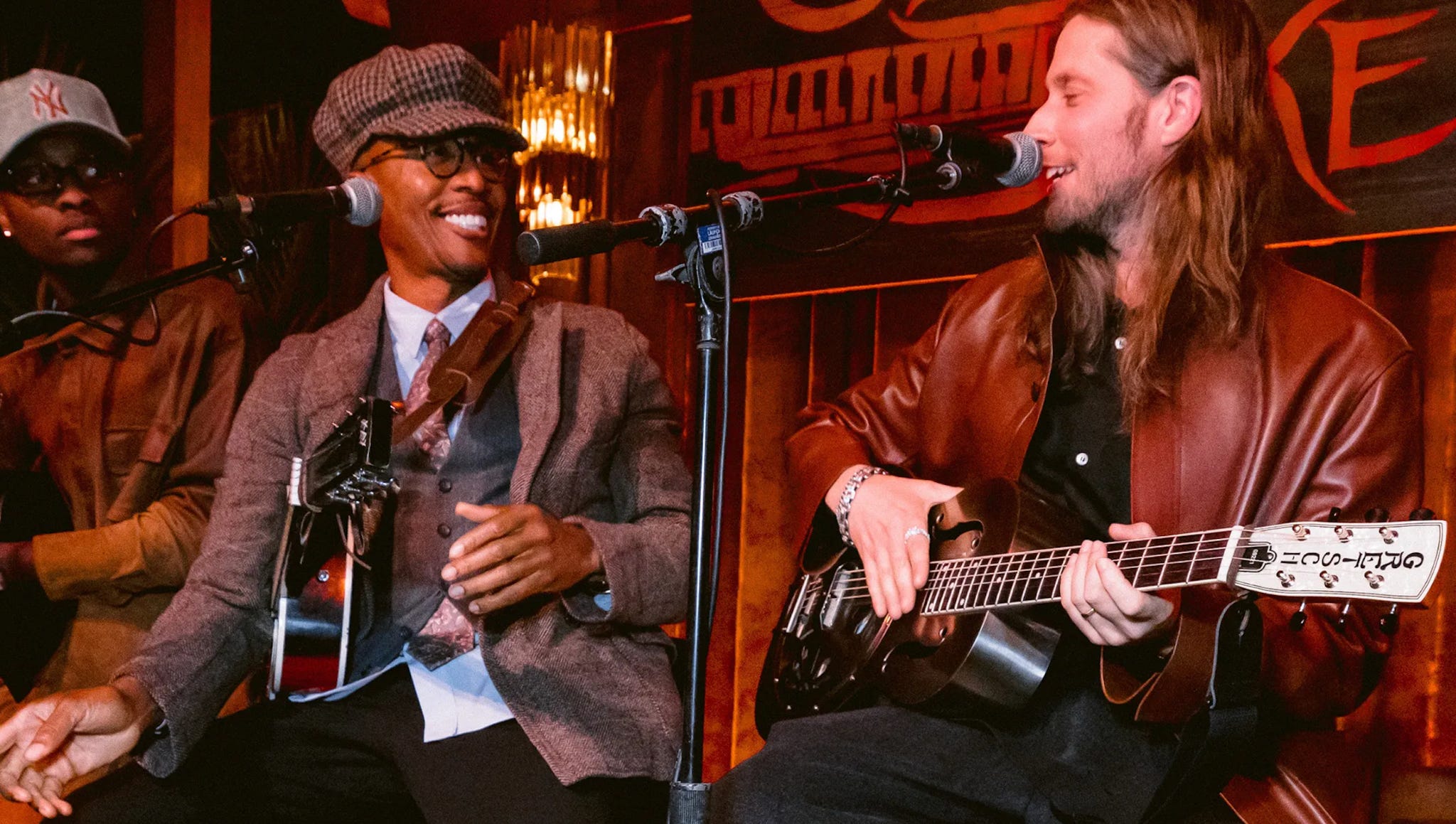
By saying everything in front of you “just keeps getting better,” you’re speaking even more blessings into existence. And I know you said you were sought out for this film, but what is it you look for in collaborators? And in the people you want to work with?
I look for people who have a vision of what they want to be. What they want to do. When I look back at my track record—rest in peace to D’Angelo, my bro—that’s somebody who knew what they wanted to do and who they wanted to be. So it was easy. It was like Sinners—the songs were fast.
When we worked on “Untitled,” I just so happened to be in New York, walking down the street in the Village, and stopped by to get a joint. I was sort of mad at him from like three months before, and he runs up and goes, “Yeah, I got a joint. But can we do a song?” I’m like, “Yeah, let’s do it.” And it becomes one of these monsters. That’s because when two people lock in, and you both have a vision, it just happens like that.
Y’all definitely made magic. And with everything you’ve accomplished throughout the course of your career, I and plenty of others would consider you a human embodiment of Black history. So my question is, what does Black history mean to you, as well as everything you’ve contributed to it?
Black history means great parenting, starting with my grandmother, Sara Ford. She took me to church, and when I was playing, she would stand up and tell everybody how amazing my nephew and I were. But the funny thing is, at that church, my amp was so small, and the organ was so loud, you could never hear anything I was doing. [Laughs]
My grandmother was one generation removed from slavery. So for me to be raised by my mom and my grandmother…I think about it every Black History Month. All day, all year. Thinking about the things our people went through.
My uncle had to go to school and only had one pair of jeans. Then a car would drive through a puddle and muddy up his clothes. He didn’t have any other clothes to wear, so he’d have to go back home, put on a dress, and go to school. [Laughs] So, when I think about that kind of history? As Black people, we can get through anything.
No doubt. So after y’all win the Oscar for Best Original Song, what are you gonna do to celebrate?
We got some stiff competition. But if we do win, I don’t know what I’ll do. That’ll be crazy.
Might have to put one in the air for D’Angelo.
Oh, of course! Definitely.