

'We're Celebrating Your Legacy': N.O.R.E., DJ EFN Toast to 10 Years of Drink Champs
From false starts and unlikely beginnings, to viral moments and cultural milestones, the Drink Champs hosts reflect on the wild journey that changed hip-hop media forever.

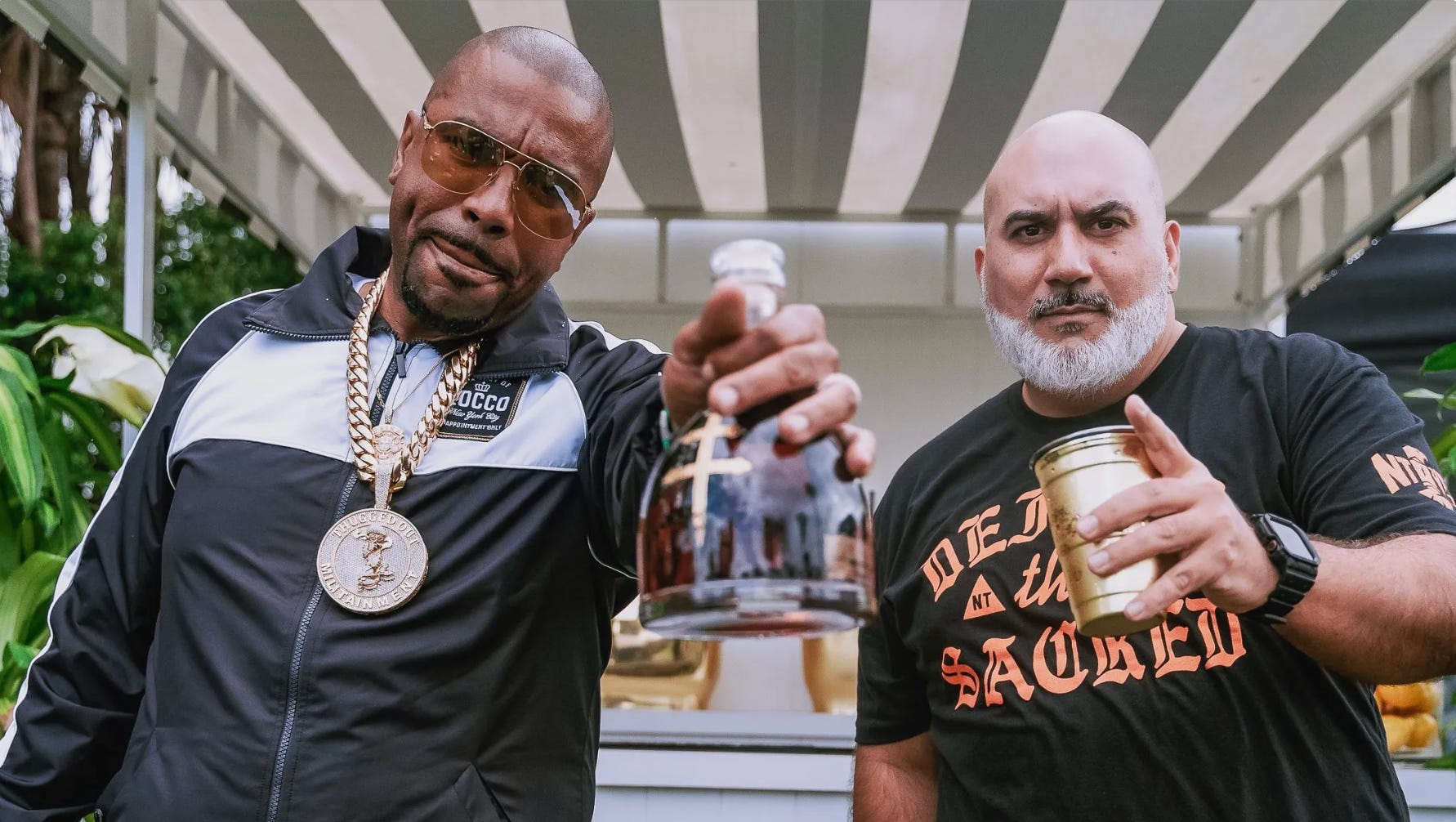
In what’s become routine, the Knicks just embarrassed the Spurs—again.
Yet somehow, LeFrak City, Queens native N.O.R.E. is still unhappy.
After a lifelong allegiance to all things Madison Square Garden, most of us would be delirious with glee after our team just pulled off the greatest comeback in NBA Finals history. But the man who gave us “Super Thug”—fashionably late and proudly buried beneath a Knicks snapback, matching jersey, and an infectious grin—is perturbed.
“I need y’all to see me, man!” he rants. “My facial expressions are great!”
“About time you got interrupted for once,” I joke, to an eruption of laughter from his partner in crime, DJ EFN.
In the wonderful world of entertainment, technical difficulties are the norm. Yet much like the Knicks, despite seemingly insurmountable odds, the best in the business rise to the occasion—and dominate.
Since its inception in 2016, Drink Champs has done exactly that, blossoming into a cultural phenomenon in the process. It’s a fascinating tale of a time before every rapper in the universe had a podcast, but that's their story to tell.
So with the three of us scattered throughout the globe, and despite Zoom’s best efforts to turn N.O.R.E. into a mime, we chopped it up to reflect on their ascension into podcast demigods.
“I’m the Yalla Yalla! Y’all got to see me, dammit!”
This interview has been edited and condensed for clarity.
Jay Connor: So after 10 games in a year—my bad. 10 years in the game—
N.O.R.E.: [Laughs] You know what’s crazy? We knew exactly what you meant.
DJ EFN: Yeah, we knew exactly. [Laughs] We’re all on the same wavelength.
[Laughs] Nah, but congrats on 10 years in the podcast game. When y’all started back in 2016, the podcast space looked very different then. What was it y’all set out to do with the creation of Drink Champs?
DJ EFN: Several years before we started the podcast, we had a show on SiriusXM. It was just something we did for fun in my studio. It looked and sounded just like Drink Champs; it just wasn’t a business for us.
When we stopped doing that, we were trying to figure out a way to do that same thing we had so much fun doing, but turn it into some kind of a business. Not a business that would take over our lives, but something on the side we could do for fun and make some extra money. We never thought it would become the juggernaut it is now.
I had friends who were in the podcast space early, and they were always advocating for us to become a podcast. I had a homie named Godfree who had Gamertag Radio—
N.O.R.E.: Shoutout to Godfree.
The comedian?
DJ EFN: Nah, Godfree has Gamertag Radio. It’s a gaming and hip-hop podcast, and he was always pushing for us to get into the podcast space. So when he ended up connecting with CBS Radio, he was like, “Yo, I could connect you if you want a distribution partner for the podcast.” So I told N.O.R.E., but the timing wasn’t right, and it took a few years to finally get it together.
But we were always using the term Drink Champs. If you were hanging out in the studio with us, when we were drinking, smoking, or whatever, if you couldn’t hang, we’d say, “You’re not a Drink Champ.” I loved that term so much that I grabbed the .com of the website, grabbed the social media handles, copyrighted it, and had my boy Skam create our legendary logo. So when we connected with CBS, and they asked for some pilot episodes to see what we were gonna do, we were ready. I told N.O.R.E., “I got the logo, I got everything.” He was like, “Let’s do it.”
What we wanted to bring to the table was a show that shared all these conversations that were happening backstage or in the studio that most fans weren’t privy to. We wanted them to be a fly on the wall at these studio sessions, where people are drinking, smoking, and just shooting the shit about the industry, the culture, their journeys—and celebrate our guests, their careers, their legacies, and the culture as a whole. That’s why we created Drink Champs and what we set out to do.
Wait. Hold up. The XM Radio show being the precursor to Drink Champs is breaking news to me. That’s ill. I didn’t know about that. I always thought y’all jumped off the porch with the podcast.
DJ EFN: [Laughs] Nah, it had a crazy name. N.O.R.E. came up with that name because he wanted to include our crews and our homies. Shoutout to Leo G, who was at XM Radio. But if you go on YouTube and search Millitainment Crazy Raw Radio, you’ll see the clips. We had the same intro; we’re drinking Tiger Bone, we got our homies there. We just didn’t have too many guests at the time ‘cause we were in South Miami at my studio. It was a mix show, with my homie DeeJay K-N-S spinning records. We just had a lot of fun. Go check it out.
For sure. And your fans appreciate y’all for creating a platform that lets them be a fly on the wall. That’s what makes Drink Champs so special—and stand out from so many other shows because your guests feel so comfortable. Y’all were really one of the first of this magnitude to bring your homies on and create an environment of transparency and vulnerability so that we get the stories we’d otherwise never hear. Y’all even helped Mad Skillz and Jazzy Jeff peace things up after 10 years of not speaking. That’s crazy.
DJ EFN: Yeah, that was crazy.
N.O.R.E.: Thank you for noticing that.
Nah, but so many memorable moments on that show have been a testament to the energy you two bring to what you’ve built. We gotta salute that.
N.O.R.E.: And we made Rev. Run send Mad Skillz his hat.
[Editor’s Note: It’s all love now, but here’s the backstory on why Mad Skillz wanted to “beat the shit” out of Rev. Run of Run DMC in a past life.]
Yeah, Mad Skillz is my guy, so I remember that.
N.O.R.E.: Yeah, that’s the homie. He just won a Grammy. Big ups to him.
For sure.
N.O.R.E.: That’s one of the best things about Drink Champs: when I speak to a fellow artist, and they tell me they’re getting their quota back. That they’re back outside and living. That to me is like, “Wow.” Because I don’t feel like anybody has a time limit. These European artists? These rock artists? They live on forever. They’re still touring right now, and they’re 900 years old. So why are we putting a time limit on rappers? That shouldn’t exist. They call it “washed up,” but people aren’t washed up. They’re seasoned.
We want to give them their flowers, man. One of the best things I could ever do is just like look at an artist and—maybe they don’t have a lot going on at the time. Me and EFN will say, “I would love to have them on the show.” And once they come on, I can look on their Instagram, they’re in Europe and—
They’re poppin’.
N.O.R.E.: They’re all over the place! And I’m like, “Holy moly guacamole!” This is the real gift of what we’re doing. Not the money, not the accolades. But when we can actually say, “Homie Headphones hasn’t been outside, but Homie Headphones is lit again.” It’s so beautiful, man.
DJ EFN: That was what was important to us: to create a platform to fill that void. To start with our peers, and the artists before us, and give them a place to go. When we started, you had to be an artist that was considered current or relevant. But for us, we care so much about the culture that you never stop being relevant.
The pioneers and our peers, anybody that’s truly contributed—whether you’re someone that’s well-known or not but were a key contributor to the culture—that’s who this platform is for. To come tell your story and let people who might not have known or forgot come on and remind them what you contributed and who you are.
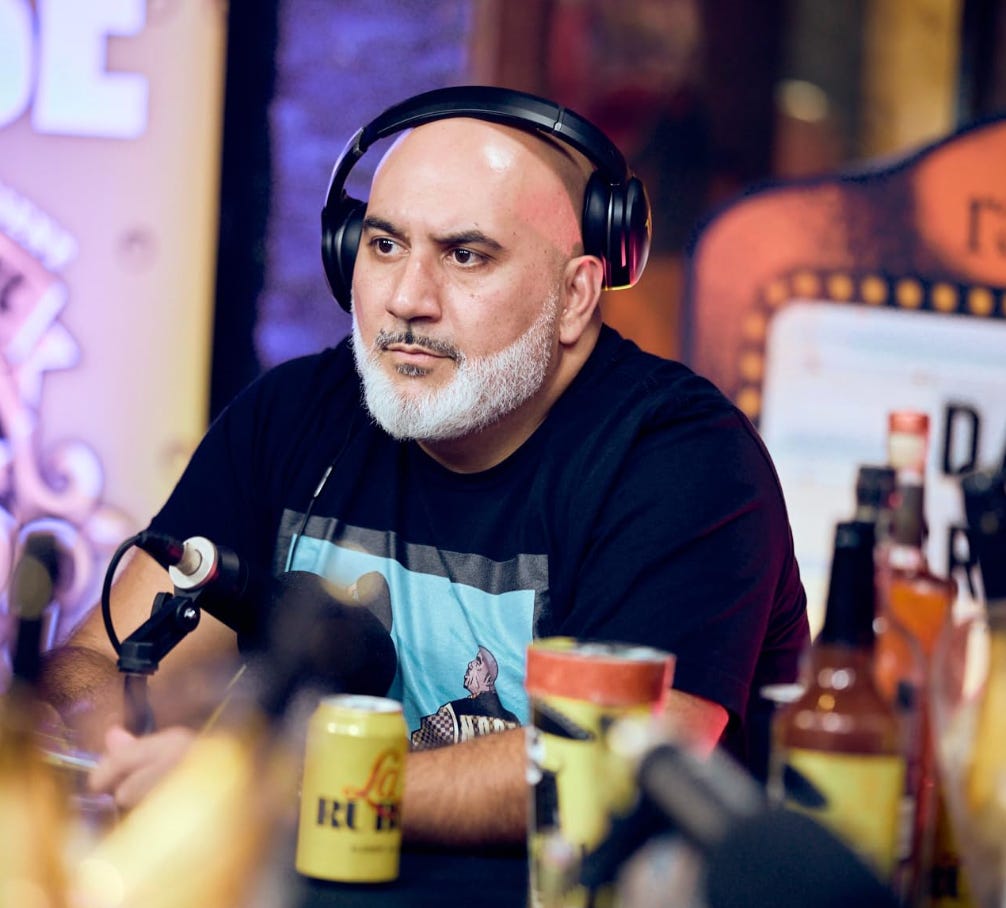
To that point, what role has your show played in humanizing those artists? In the 90s, when y’all were coming up, the only avenues to get your story out were radio or magazines. But now, for better or worse, artists have much more control over their narrative.
N.O.R.E.: I love that question. Being famous is a hard thing to do, man. It’s really, really, really hard. So I feel like every hip-hop artist who has had success—even if it’s one single—they’re heroes. I live this. At the end of the day, if you’re a construction worker, you can take off your construction gear, and you’re done for that day. I never take off my construction gear. Never. And anyone who’s ever been even a little bit famous, they can never take off their construction gear. They’ll always be who they are.
DJ EFN: One thing I want to add—because we haven’t mentioned this in any other interview— it was always important to me that we come from two different places. N.O.R.E. is from New York; I’m from Miami. I’m a DJ; I was on the marketing side, the behind-the-scenes side of the music industry. Then you have N.O.R.E., being the legendary artist that he is. It’s two different POVs, and we cover a lot of ground for the culture, which helps balance everything. There might be someone who’s a legend to me that N.O.R.E. wasn’t really thinking about, and once we have them on the show, he understands what that person means to a region or to hip-hop culture as a whole. I love that about the show.
That’s a really good point. As a journalist, it’s dope to interview “The Man,” but sometimes you get a better story when you interview the person next to “The Man”. Because they might be more candid or willing to speak on things that the superstar won’t. So with N.O.R.E being a platinum artist, “running laps around the English Channel with a cocker spaniel”—
DJ EFN: [Laughs]
N.O.R.E.: You wild! [Laughs]
—and you being a DJ, dropping mixtapes, being on marketing teams, managing artists and producers, making all the moves behind the scenes, you offer two entirely different perspectives from the same experiences—which allows you to fully contextualize the whole story. You know what I’m saying?
But with you guys being so active in your careers when Drink Champs first started, was it difficult to transition from everything y’all already had going on to pivoting into podcasting full-time?
DJ EFN: I wouldn’t say that it was difficult, but it was an adjustment, for sure. We didn’t think it was gonna be something that would completely take over our lives. We thought we would just get together once a week, like we did with SiriusXM, and that’s it.
Yeeeeeeah, podcasting doesn’t work like that.
DJ EFN: It completely took over our lives. I always feel that everything we had done up to that point prepared us to take advantage of the immediate success of Drink Champs. Everything I’d done as a mixtape DJ, as a marketing person, a street team person, management—all that stuff leading up to this helped me. I applied all those skills I learned; all that experience.
We own this. It’s not like we had a lot of outside help. We did this completely ourselves with distribution partners—which we love, like Revolt and everyone we’ve had in the past who have all been really great—but in the beginning, it was just us. It’s the same with N.O.R.E. I think everything he’s done in his legendary career was a huge factor in our success. We applied all of our experience, and dumped it into Drink Champs.
One of the people who’s had a profound impact on me as a creative and eventual journalist was Reggie Ossé, a.k.a.—
N.O.R.E.: Combat Jack. Yeah.
DJ EFN: Rest in peace, man.
Word. Combat Jack. The podfather. What influence did he have on how you guys approached Drink Champs and your journey as podcasters?
N.O.R.E.: Reggie was my first lawyer.
Yeah, I remember.
N.O.R.E.: I’ll be honest with you: He didn’t negotiate the best deal for my group, Capone-N-Noreaga. But as a man, he came up to me—and he documented this; he actually said this on camera—and he was like, “Yo, if there’s one thing that I ever regretted, it was negotiating the Capone-N-Noreaga deal.” I fully forgave him in real life. It was a deal where negotiations started on Monday and closed on Wednesday. He expressed the fact that—how can I say this? That man has passed away, and I love him—he invited me on his podcast, and we sat down and talked about it. This is all documented.
He said, “Sorry,” and I one million percent accepted his apology. Me and him were great. He has a legendary episode with us and Jack Thriller where we called 2 Chainz. It’s one of the greatest moments in Drink Champs history. So I always want to give Combat Jack his flowers and send love to his family. His son is out there doing crazy! And I love that.
DJ EFN: Let’s not forget that Combat Jack and the Loud Speakers Network reached out to us early and said, “That thing you guys did on SiriusXM would be a great podcast.” They even sent us equipment because they wanted us to join their network. Early! I’d say maybe two years prior to us finally launching Drink Champs.
Loud Speakers was killing back then.
DJ EFN: Yeah, they sent us equipment twice. N.O.R.E. just wasn’t ready to start the podcast at the time, so I sent the equipment back. Then they had another convo with us. N.O.R.E. seemed like he might be ready, so they sent it again. Then we weren’t ready. I’m not going to just put out N.O.R.E.—we weren’t ready. So I sent the equipment back again. And with that opportunity, we just didn’t end up going with them.
N.O.R.E.: Who’s the other guy from Loud Speakers?
DJ EFN: I forgot the other guy’s name.
You mean Chris Morrow?
N.O.R.E.: Chris! Yes! We gotta big them up because they really had the vision for us first. It’s the truth.
DJ EFN: Yeah, they were one of the first. And when we launched, and it was an out-of-the-box success, Combat Jack congratulated us. He really welcomed us into this space. They are the pioneers.
N.O.R.E.: I want people to know that. Rest in peace, Combat Jack.
He definitely had a big impact on so many podcasters in this space, so I’m glad y’all were able to peace everything up and become friends before he transitioned. But circling back to how the podcast industry has evolved over the past decade, you guys and Joe Budden were among the first to launch podcasts as successful rappers. But now it seems like every rapper—whether they’re a seasoned vet or just trying to catch a buzz—has a podcast. Y’all gave everyone the blueprint.
N.O.R.E.: My momma might have a podcast! [Laughs]
Shit, you might be right. [Laughs] But to that point, do you feel like your peers share your respect for the craft? Or are they just trying to hit a lick and stay in the algorithm?
DJ EFN: Most of those artists that have podcasts now came to Drink Champs, and we advocated for them to start one of their own. We were always telling them, “Yo, you should start a podcast.” I can’t speak to their intentions, or how they feel about what they’re doing, but I’m proud that we’ve opened up a whole new lane for people to make a living off of—if their music wasn’t doing that for them anymore. It’s another way to stay in the culture and still contribute. So I’m proud of that.
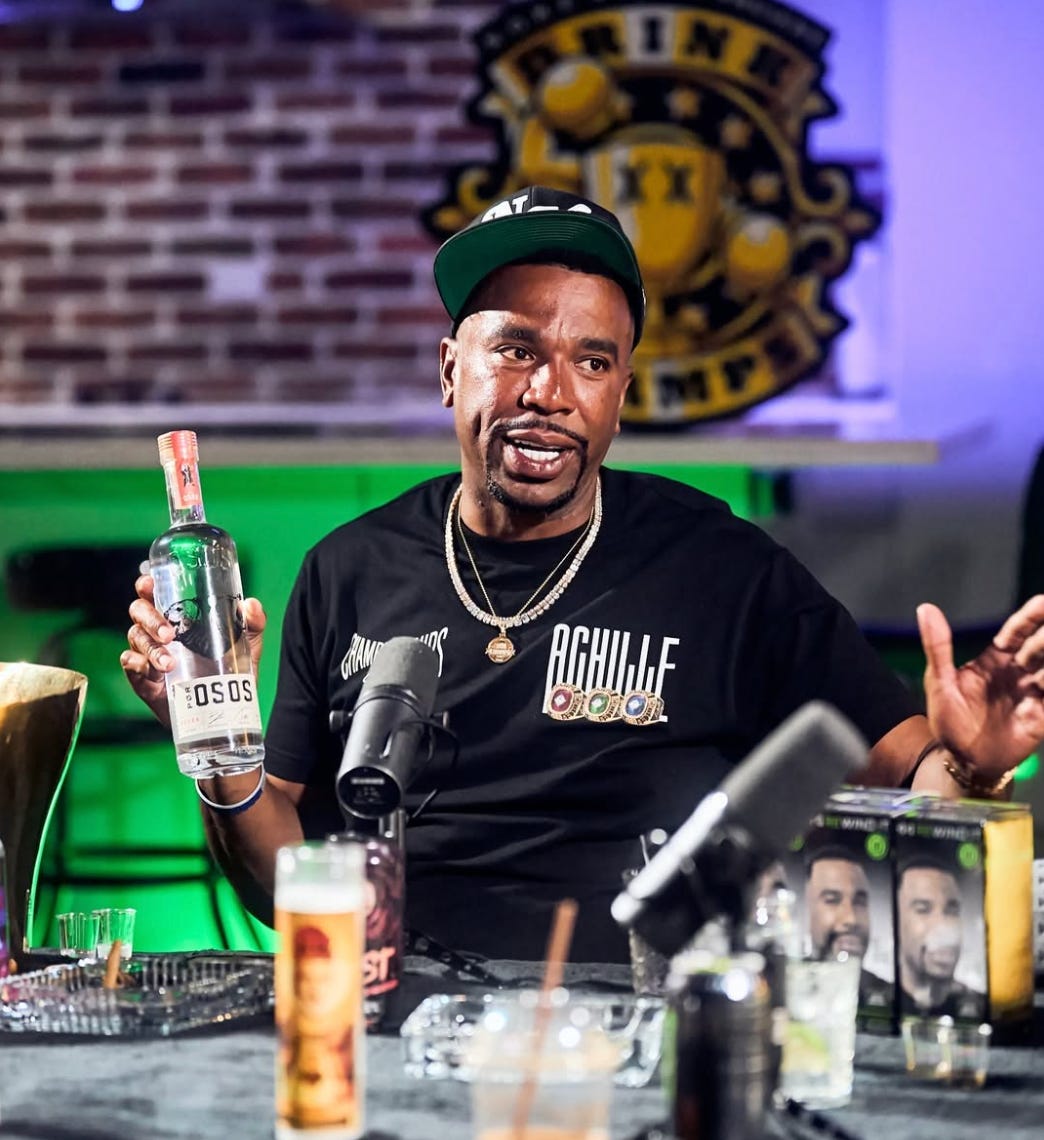
I want to circle back for a second. Earlier you mentioned the role that your distribution partners have played in your success. So how did you guys come into partnership with Revolt? How did that relationship come about?
N.O.R.E.: After Godfree connected us with CBS, we were like, “Nah, man. We need a hip-hop network for our hip-hop show.” And Revolt just stepped up. It’s been history ever since. CBS was a great partner for us as well, but they just weren’t a part of the culture.
DJ EFN: But remember, N.O.R.E. Just to be accurate, it was simultaneous. CBS was our audio partner. We had the vision and the foresight to start filming video from the beginning, but that wasn’t the main thing for the first six months. Then we connected with Revolt through our relationships there. N.O.R.E had a relationship with [former Revolt chairman] Puff; we had Rahman Dukes, who used to be at MTV—
N.O.R.E.: Wasn’t Shaheem Reid there?
DJ EFN: Later on, yeah. And I had a documentary series called Coming Home on Revolt when it first launched. So we had that relationship. But they saw what we were doing in the podcast space, and they had the vision and the foresight to say, “This needs a visual platform.” To us, that was dope because I don’t think there was any other podcast—definitely no hip-hop podcast—that was on cable TV and backed by an entity like Revolt. So yeah, the partnership has been beautiful, and they’ve been great with us. We’ve had different audio partners, but the visual partnership with them—both linear and digital—has really stood the test of time.
I was about to say: I don’t want to go all Soulja Boy on you, but I really feel like y’all were the first to popularize visuals on that level. At least from the hip-hop perspective.
N.O.R.E.: You said it, not me. [Laughs]
When you started talking about a separate deal with Revolt for the visuals, I was like, “Damn.” I know Combat Jack had his situation with Complex, but the podcast was strictly audio.
N.O.R.E.: Yeah, it wasn’t leenier.
DJ EFN: Linear, yeah. [Laughs]
N.O.R.E.: Linear! [Laughs] Y’all know I’m dyslexic. But big up to Revolt; they’re great partners. We wanted to own our stuff, but they allowed us to do partnerships with other entities.
That’s real. Some of the best advice I ever got was years ago, when my homeboy Van Lathan told me to never sign an exclusive deal. ‘Cause unless the framework of the deal looks right, you limit yourself and can get caught up in some bullshit.
N.O.R.E.: At one point we had Mass Appeal; we had TIDAL. It wasn’t cross-collateral.
DJ EFN: Yeah, they weren’t competing deals. They all contributed and helped, so it was mutually beneficial to everybody.
N.O.R.E.: And Revolt allowed us to do that. So that’s the reason we’re celebrating 10 years—10 years!—of greatness, of us being together, and we’re still having fun. Shoutout to the Revolt staff.
DJ EFN: The Revolt staff has been great for years. We also gotta make sure we mention we’re dropping the 10-year anniversary episode on June 18th. We wanna make sure everybody checks that out.
We got some surprises? Or…?
DJ EFN: It’s going to be just a very—there are some surprises, but it’s a very nostalgic episode looking back at our 10 years.
Definitely looking forward to that. So after 10 years and 500-plus episodes, who’s one person you’re still dying to interview, and one person y’all would love to have interview the two of you? Besides myself, of course.
N.O.R.E.: You’re definitely first. [Laughs]
DJ EFN: Me personally, I’m such a history buff in terms of the culture. I love that we’ve had Grandmaster Flash and Grandmaster Caz, so I want Kool Herc on the show. I would love to give Herc his flowers. I think the culture needs to see him on our platform and hear his story—his story’s been told—but do it the Drink Champs way.
N.O.R.E.: I’m sorry to double down on him, but yes. Kool Herc.
DJ EFN: Melle Mel as well. To me, it’s all the pioneers. Come on our show, take advantage of our platform. Let’s celebrate you. Let’s have fun. I don’t consider us an interview show, to be honest with you.
That’s interesting. What type of show would you consider it then?
DJ EFN: It’s a celebratory conversation. We’re celebrating your legacy; celebrating the culture. And we’re all able to reap the benefits of the culture. That’s why I want the pioneers to come on. This was all built on their backs. They created the foundation.
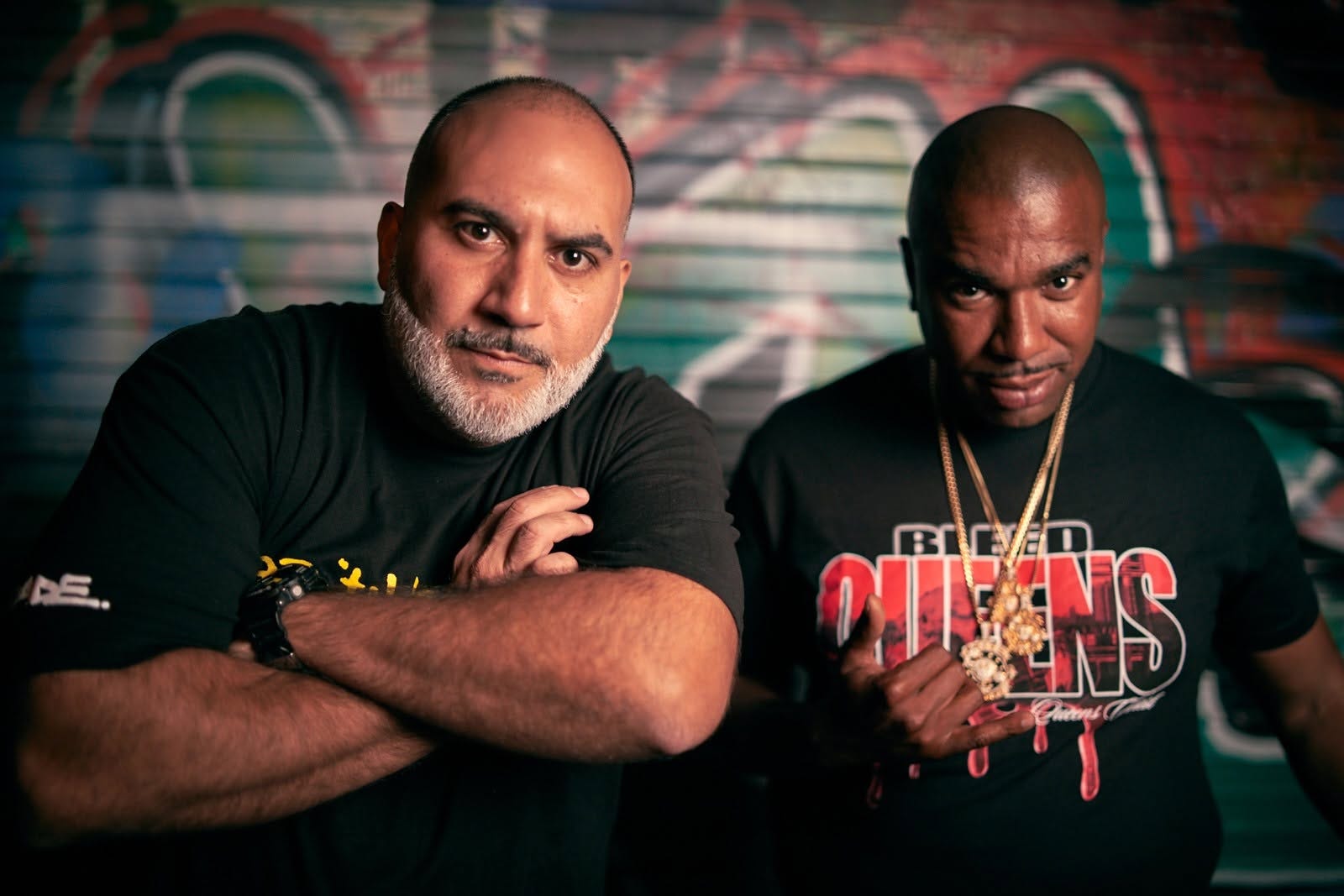
If we’re talking about being a pioneer and creating a foundation, then have a recommendation—and this recommendation came to me literally this morning.
N.O.R.E.: I love it.
Are y’all familiar with Sean Thomas, a.k.a. Barney Rubble?
DJ EFN: No, man. I’ma be honest with you. No.
So he’s a keyboardist and producer that was a member of the Death Row Players, the in-house musicians back in the day at Death Row Records. He played for Daz, he played for Dr. Dre, he played for Warren G, he played for all those dudes. He’s been super low-key for a while, but within the last month, he’s been on Instagram showing how he created a lot of those classic songs by himself. “21 Jump Street,” “Murder Was the Case”—
N.O.R.E.: Wow.
And he’s talking about how far too often in this industry, these keyboardists and guitarists are taken advantage of and dismissed as “session musicians” instead of the songwriters and co-producers they actually are. He’s like, “Nah, I was never told what to play. I created those songs from scratch. I was in the room by myself, playing to a drum loop, and I came up with all the ideas, the chords, the creativity—I did everything.”
DJ EFN: Oh, wowwwww.
He’s literally the Death Row sound, and nobody has any idea.
DJ EFN: How have we not heard of him?!
That’s what I’m saying! It’s crazy. Y’all gotta get him on Drink Champs immediately.
DJ EFN: Yo, thank you for that.
N.O.R.E.: Yeah, thank you. And we gotta have you on the show too.
Oh, no doubt.
DJ EFN: I tell people it’s okay not to know, but if you care about the culture, if you care about something, it’s not okay to not want to know. You know what I’m saying?
Big facts.
N.O.R.E.: Word. That’s a great saying.
Drink Champs has given us so many incredible moments throughout the years, and I’m proud of everything you two have created. Did you guys have any final thoughts after 10 years in?
DJ EFN: We’re just really grateful to the viewers and the fans—we call them the Drink Champs Army—our whole staff that’s a part of the production, and to our partners. Revolt has been nothing short of amazing. We own our IP; we own our show. But still, our partners act like they have an equity stake. That’s how much they’re involved in making sure we’re successful.
We’re really grateful to Revolt, and obviously Black Effect, who’s our other audio partner. And thank you to Revolt, man. For everything they’ve done after 10 years, we’re still here.
N.O.R.E., what you got?
N.O.R.E.: Walking around New York City, I’m seeing the fans. And they know that we’re celebrating 10 years. They’re saying, “Congratulations.” It’s like, wow. This is something really, really, really beautiful. And now hip-hop is controlling media. I love that. I love the fact that if I want to see sports now, I can go to a hip-hop sports show. If I want to see fashion, I can go to a hip-hop fashion podcast. I love the fact that we stepped it up.
Now, should it be credited to us? Saying that we were the first one at the forefront? Yes. But I’ll let y’all say that. [Laughs] Let me not say no more.
But that’s the thing though: How many times have we seen people not get their due because they didn’t speak up?
N.O.R.E.: People get offended. [Laughs] But to our fans, man. EFN just said it: Drink Champs Army. They’re really holding us down. They’re crazy maniac fans, and we love them. They stuck with us, so I just want to say thank you to the fans and thank you to our partners throughout the years. Revolt has been a blessing for us; iHeart and Black Effect. Big up to TIDAL, big up to Mass Appeal, everybody at CBS.
DJ EFN: We also can’t forget to thank all the amazing guests that have trusted us to come on the show. We’re a guest-heavy show, and without them, we wouldn’t be here either. They’ve trusted us; we’re in Miami—
N.O.R.E.: Repeatedly too!
DJ EFN: We’re not in the cities where everybody usually does press runs. We don’t even want that. Our thing is, don’t come on a press run, just come to the show and hang with us. But without them, we wouldn’t still be here. So thank you to every single guest that’s trusted us and made the effort to come through.
Word. I’m glad we got to chop it up, y’all. To 10 more.
N.O.R.E.: To 10 more!